
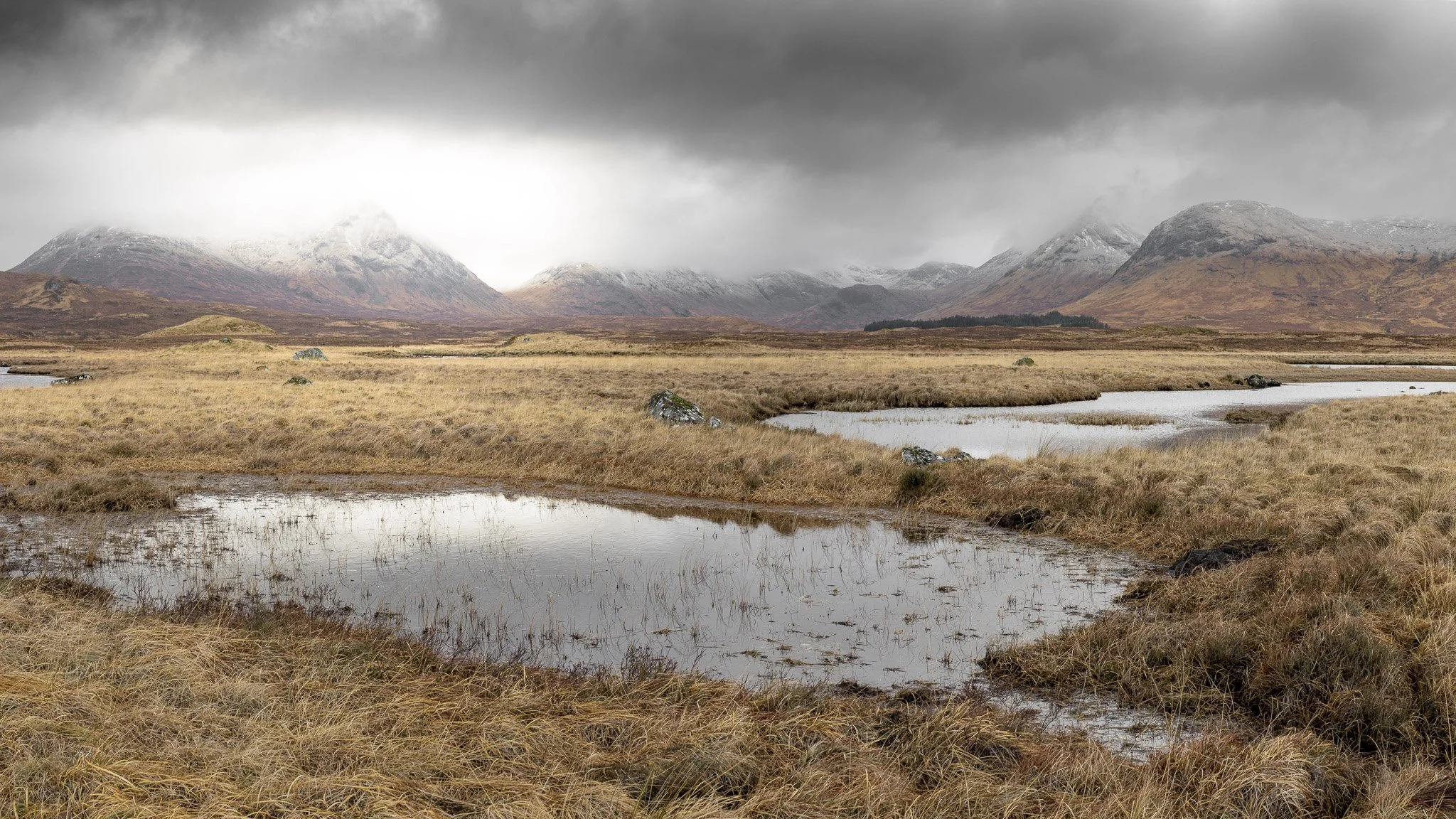
Rannoch Moor is one of the most dramatic landscapes in Scotland. Sitting just outside Glencoe, this vast expanse of moorland stretches for miles in every direction, dotted with small lochans, scattered rocks and distant mountains that dominate the skyline.
It is an incredibly atmospheric place for landscape photography. The terrain is wild and open, and the weather often changes by the minute.
On this particular afternoon, the conditions were pretty decent. Despite it being the middle of the day, dramatic storm clouds were rolling overhead, shafts of light were breaking through the sky and patches of snow were clinging to the surrounding mountains.
It was the kind of light that makes landscape photography in Glencoe so exciting.
Exploring the Lochans of Rannoch Moor
The plan for the afternoon was simple. Just wander across Rannoch Moor and explore.
This area is huge, and often the best approach is simply to walk away from the road and see what reveals itself across the landscape.
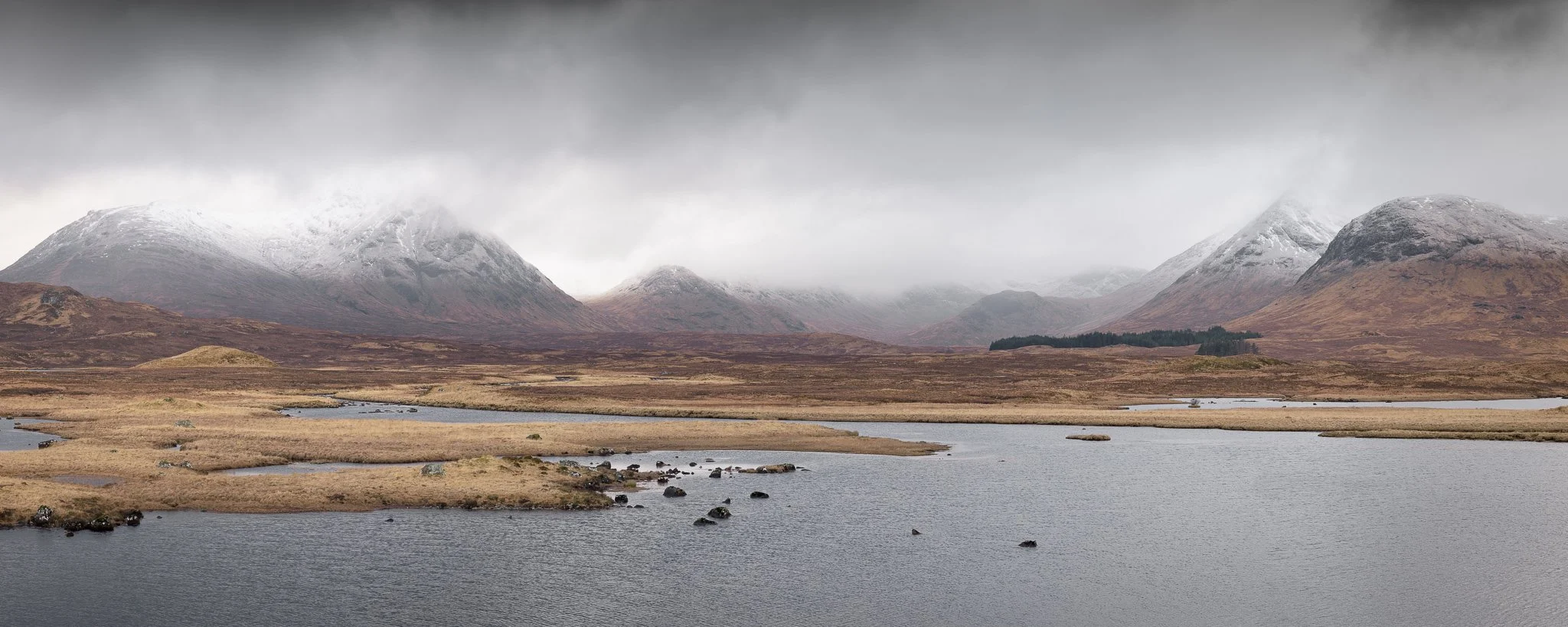
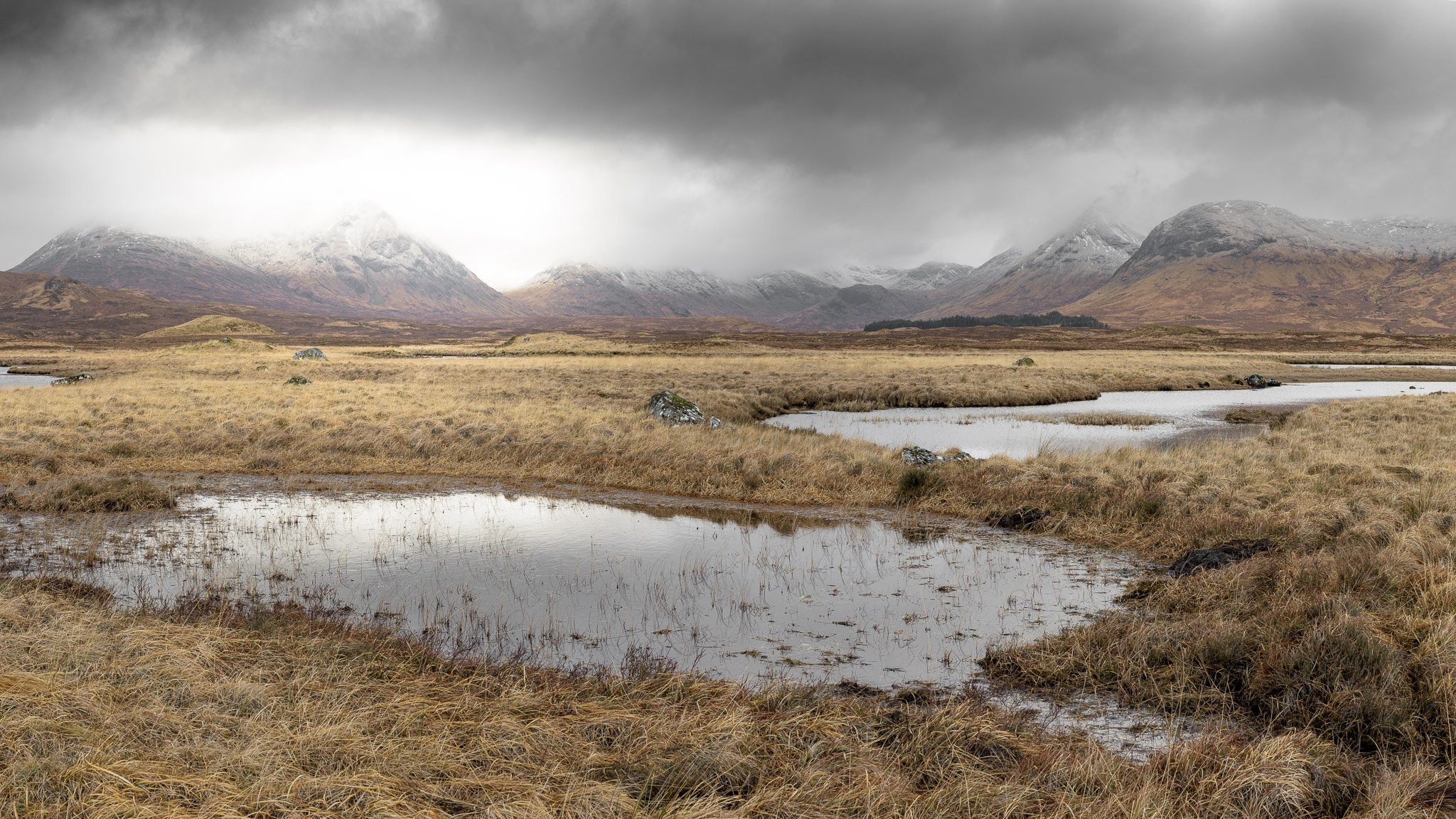
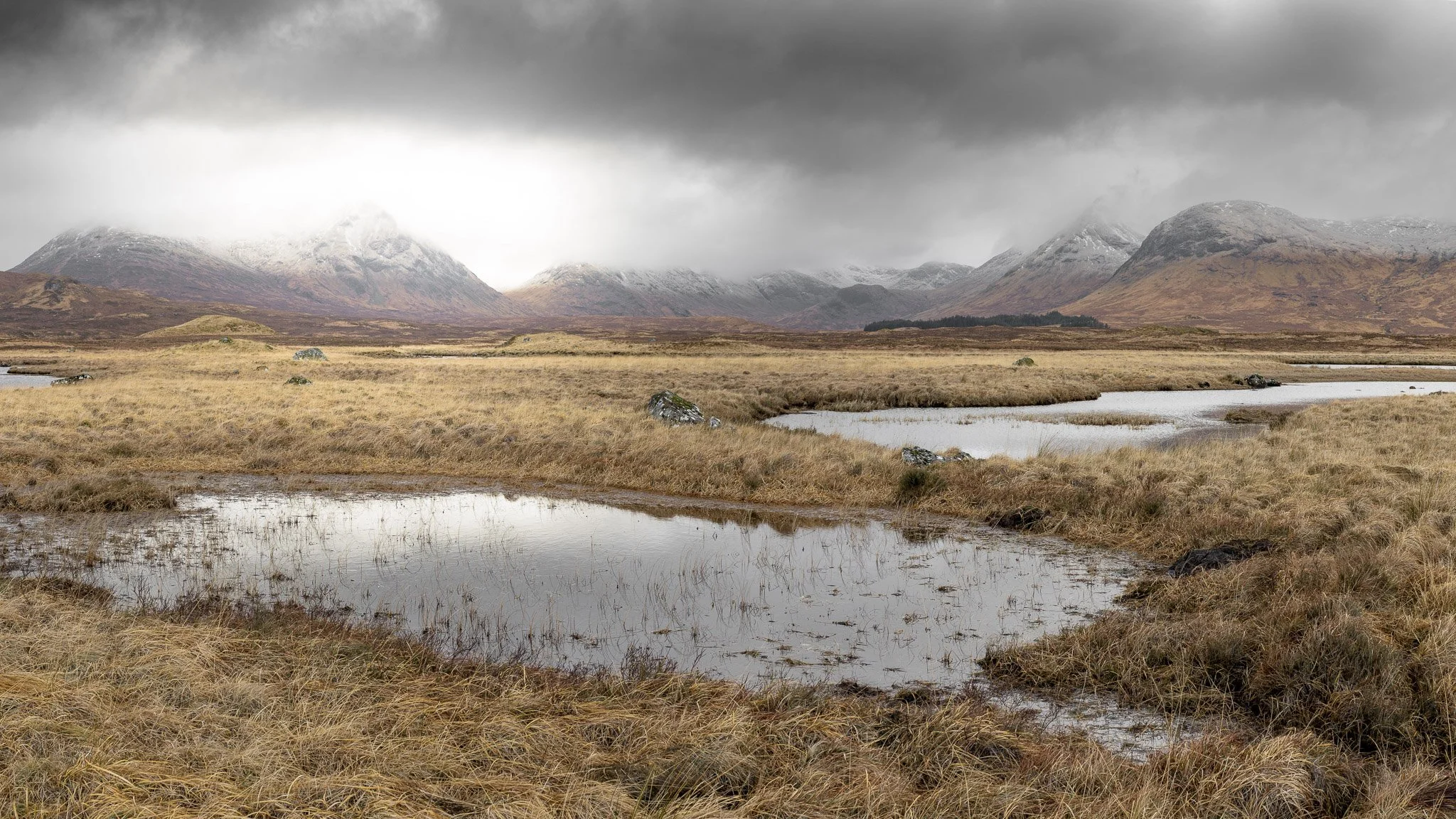
One of the first compositions that stood out was a wide view across one of the lochans with the mountains rising behind it.
The scene immediately suggested a panoramic photograph. The mountains sweep across the horizon from left to right, with the water sitting quietly in the foreground beneath them.
Even in the middle of the day, the shifting cloud cover created subtle patches of light across the mountains. Those variations in tone help give depth to the image and make the landscape feel far more dramatic.
Scenes like this are a reminder that landscape photography in Scotland is often less about waiting for perfect sunset light and more about responding to whatever the weather is doing in the moment.
Searching for Foreground Interest
Although the mountains provide an incredible backdrop, I was particularly interested in finding foreground elements to anchor the scene.
One thing I had noticed while studying maps before this trip was that Rannoch Moor actually has quite a few scattered trees. They are rare enough across the open moorland that whenever you find one, it can become a strong subject within the landscape.
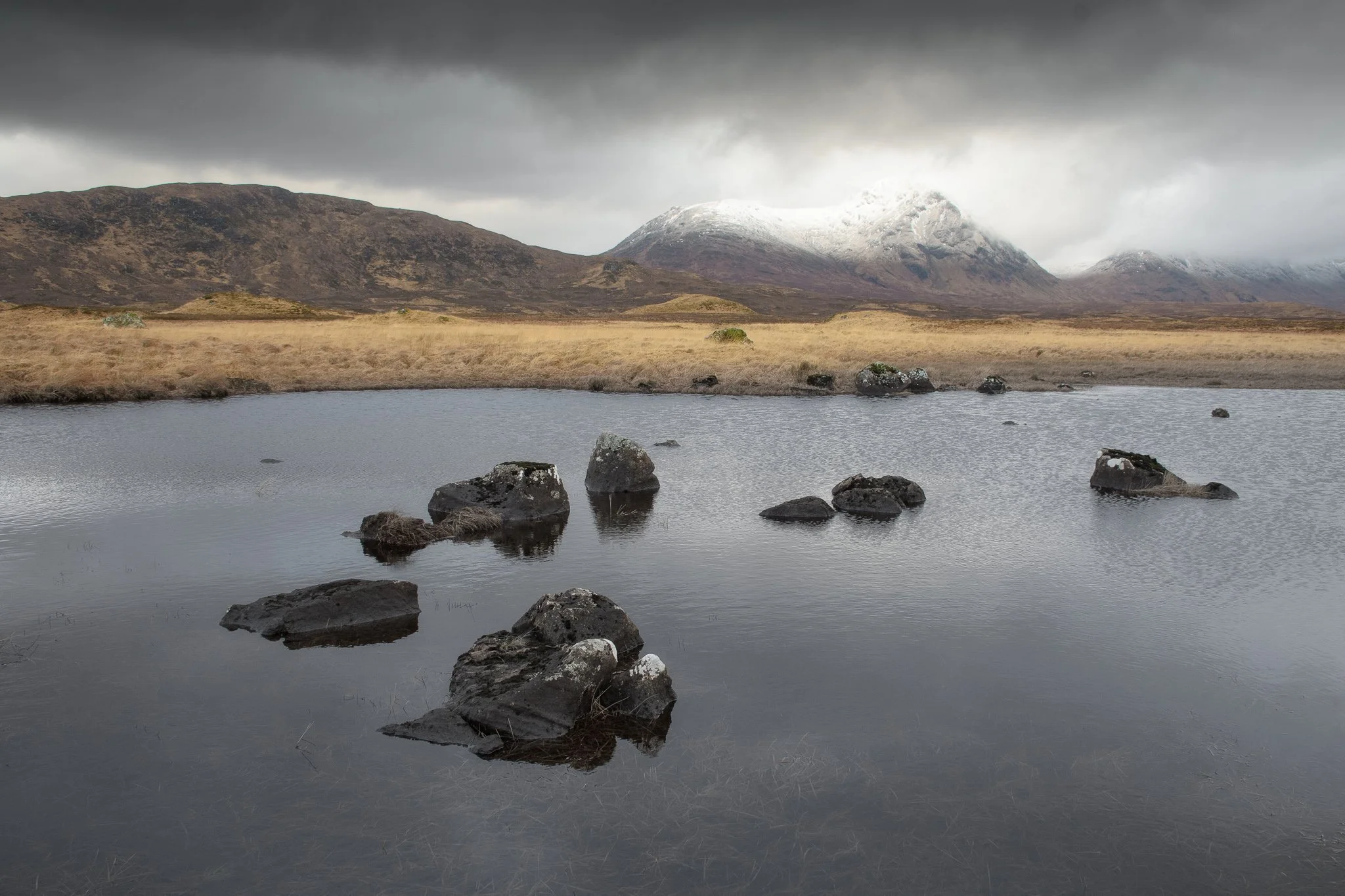
At first, though, the foreground options were mostly rocks.
I spent some time exploring around the edge of one of the larger lochans, trying to find a way to bring the rocks together with the mountains in the background.
This is where it’s easy to fall into a common landscape photography habit. We often feel like every photograph needs something in the foreground.
But sometimes that foreground can feel forced.
In this case, the rocks worked well enough, but the composition never quite felt convincing. It felt more like I was adding them simply because I thought the photograph needed foreground interest.
It is a fine balance when shooting wide angle landscapes. Foreground elements should strengthen the composition rather than just fill empty space.
A Foreground That Actually Works
A little further along the moor, something much more interesting appeared.
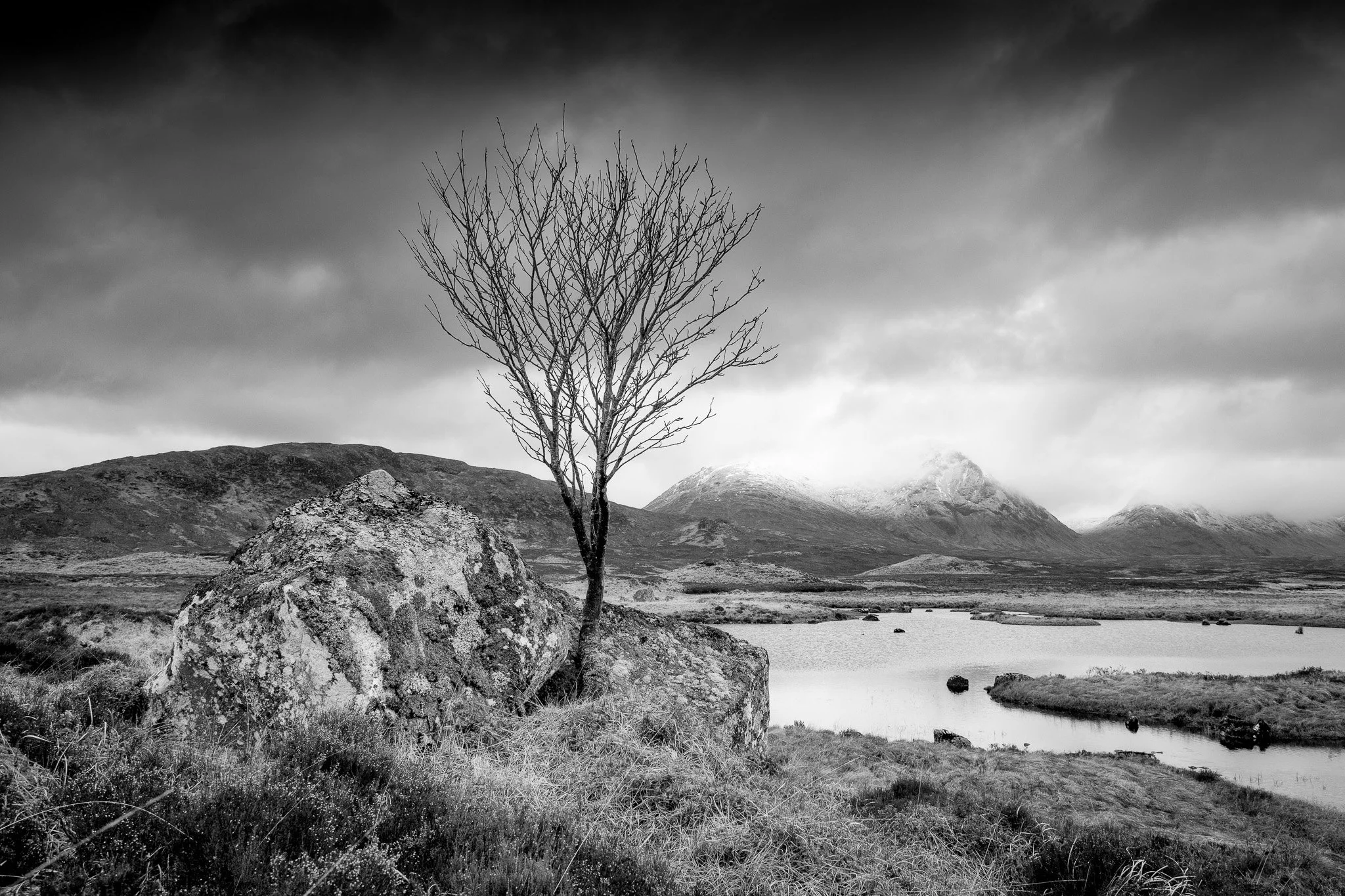
A lone tree standing beside a large rock with the mountains rising behind it.
Immediately the composition made more sense.
The tree leans slightly towards the right, which naturally guides the viewer's eye back towards the distant peaks. The rock beside it adds weight and balance to the foreground while the lochan and open moorland create space across the middle ground.
It felt like a composition that belonged together.
Rather than forcing the foreground into the frame, the elements in this scene felt connected to the wider landscape.
This is often the difference between a photograph that feels deliberate and one that feels accidental.
When Foreground Is Not Always Necessary
Wandering across Rannoch Moor is a reminder that not every photograph needs a dramatic foreground.
Sometimes the landscape itself is enough.
With such expansive views and powerful mountain backdrops, simple compositions can often work just as well as more complex ones.
The key is understanding why each element is included in the frame. If a foreground subject helps guide the viewer through the scene, it earns its place in the composition. If it doesn't, it is often better left out entirely.
Cascades Beneath Buachaille Etive Mòr
After spending most of the afternoon exploring the moor, I eventually headed towards one of my favourite locations in Glencoe.
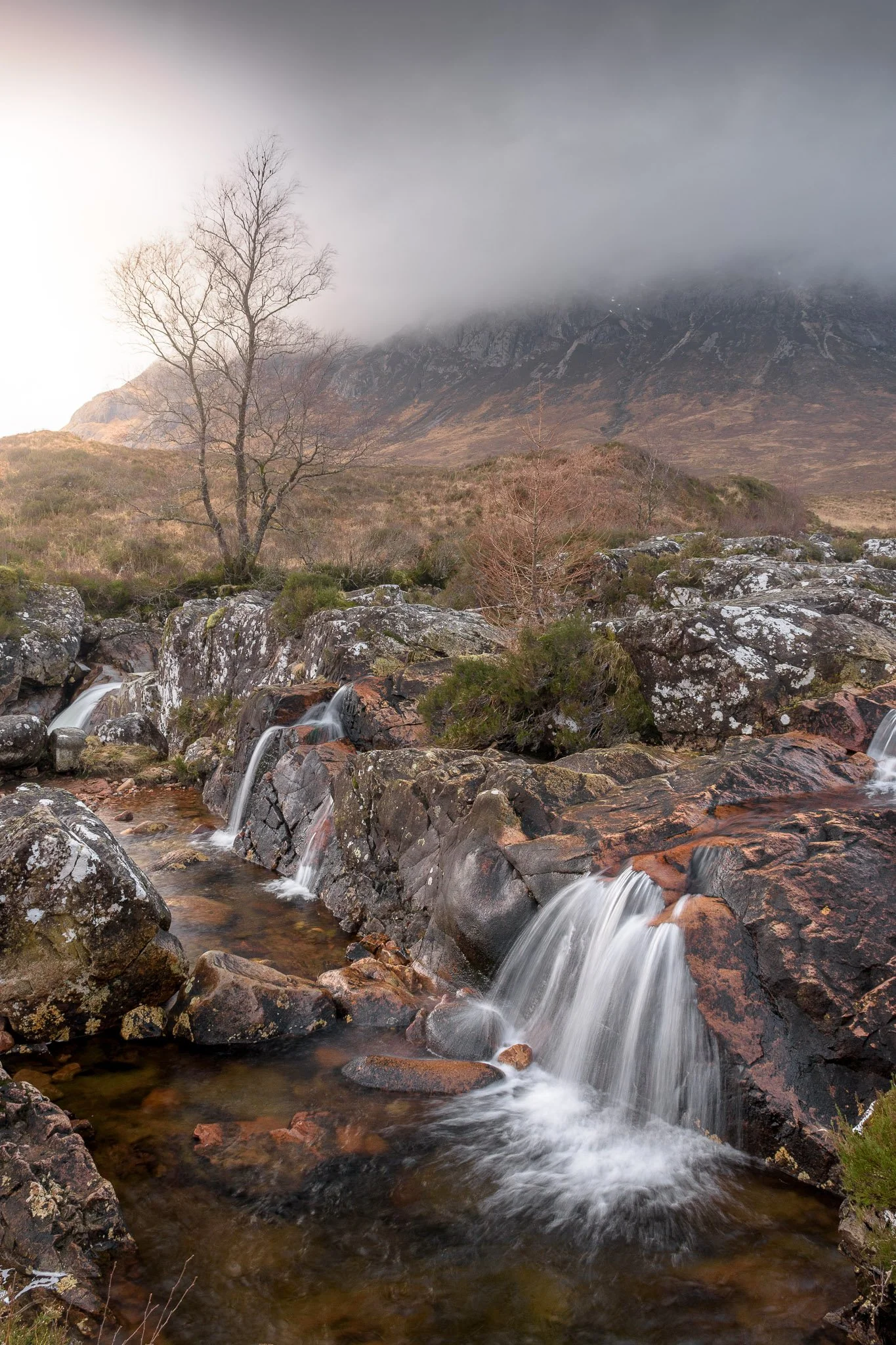
A small set of cascades flowing through rocks in front of Buachaille Etive Mòr.
This mountain is one of the most recognisable peaks in Scotland, and seeing it partially wrapped in low cloud added a real sense of atmosphere to the scene.
The composition here felt completely natural.
The flowing water cascades through the foreground rocks, guiding the eye gently towards the lone tree and eventually up to the mountain itself.
Everything in the frame feels connected.
Using a slower shutter speed helped soften the movement of the water, adding contrast against the textured rocks and winter grasses surrounding the stream.
It created a quieter, more atmospheric image that seemed to suit the mood of the landscape.
Ending the Day in Glencoe
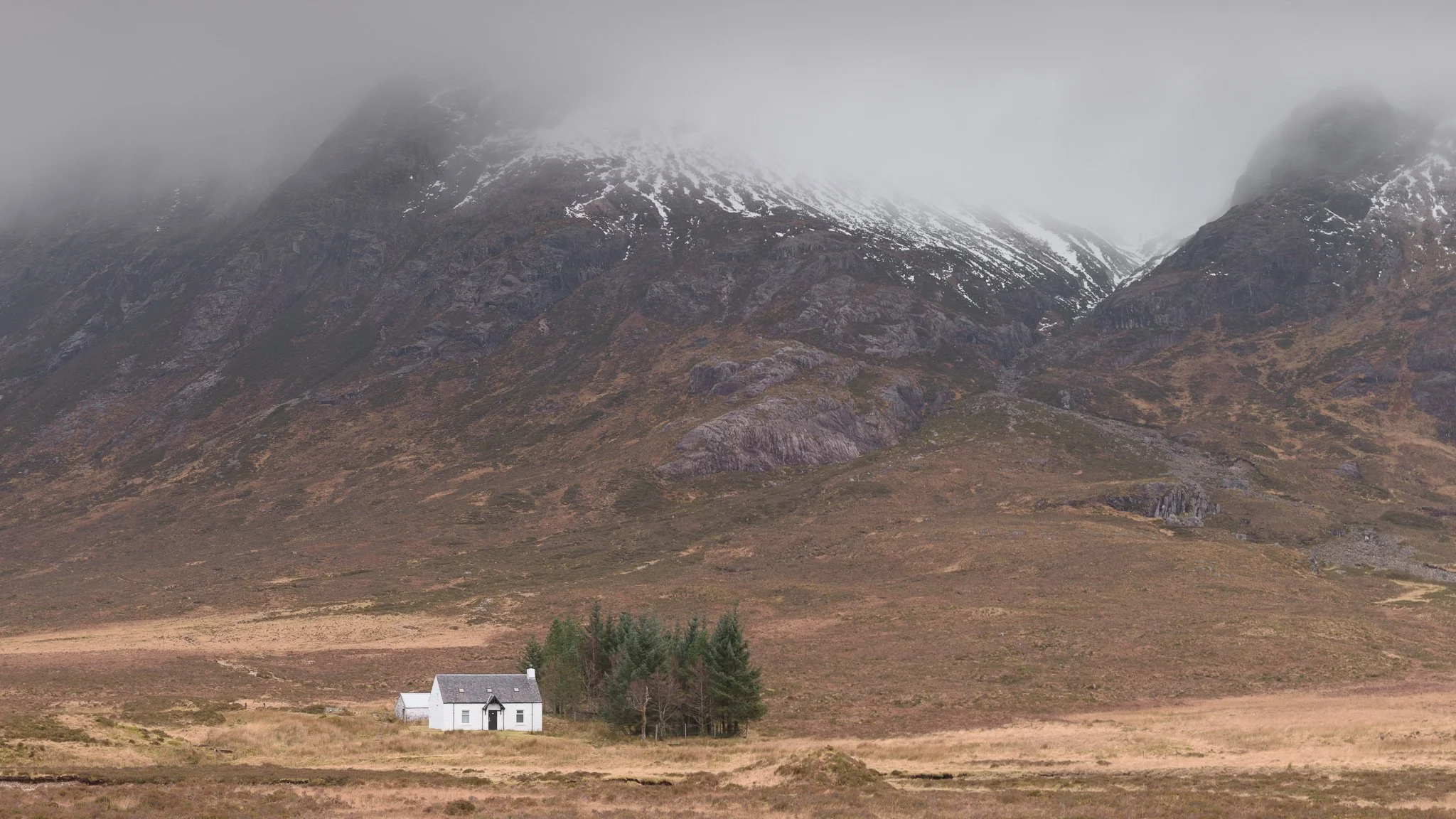
To finish the day, I stopped at another classic viewpoint tucked beneath the same mountain.
Glencoe is full of iconic locations, but even the most photographed places can still feel fresh when the conditions are right.
Low cloud, shifting light and the muted colours of winter all combined to create a scene that felt calm and dramatic at the same time.
Days like this are a reminder of why Rannoch Moor and Glencoe remain some of the most inspiring places for landscape photography in Scotland.
The landscape is vast, unpredictable and endlessly photogenic.
All you really have to do is step out into it and start exploring.
If you'd like more practical photography tips, you can download my free guide to getting consistently sharp photographs HERE.
If you'd like to see the full shoot and the behind the scenes of photographing Rannoch Moor and Glencoe in Scotland, you can watch the video below.
Popular posts:


Free Photography eBook
Free access to my downloadable (pdf) tutorial on how to get pin-sharp images.
New / Noteworthy
Photographing Rannoch Moor in Glencoe, Scotland. Exploring dramatic winter light, lochans, foreground compositions and atmospheric mountain landscapes beneath Buachaille Etive Mòr.